Corporate car rental rates are not always cheaper. Compare two quotes for the same trip, add only costs missing from each total, and check the terms before choosing. For a work trip, confirm that your employer permits the booking.
Budget's US rates FAQ explains why a company price can be higher: its negotiated rate provides consistency and may include protection products, while public prices fluctuate. That makes the contents of the two quotes as important as the headline price.
Put both quotes on the same basis
Use the same pickup and return branches, exact times, vehicle group, driver age and currency. Save the final checkout summaries. Here, a personal rate means a public offer you can use for the trip; an employer may also have a separate leisure rate.
Swipe the table to see all columns.
| Item | Corporate quote | Public quote |
|---|---|---|
| Quoted rental total | Copy the checkout total with your approved company account. | Copy the checkout total without the company code. |
| Taxes and location fees | Mark what the quoted total already includes. Record any confirmed missing charge. | Use the same tax and fee basis, including any airport or one-way charge. |
| Mileage | Record the allowance, expected distance and cost of any excess miles. | Record the allowance and any excess-mileage cost for the same journey. |
| Second driver and other extras | Record the fee for your actual driver and any equipment you need. Add only charges absent from the total. | Check applicable driver exemptions and the same equipment costs. |
| Protection products | Identify the included products and any selected or required products charged separately. | Identify the same items. Get missing prices before treating the quotes as equivalent. |
| Comparable trip cost | Quoted total plus confirmed trip costs not already included. | Quoted total plus confirmed trip costs not already included. |
| Payment and cancellation | Record when you pay, the cancellation deadline, cancellation charge and no-show terms. | Record the same conditions. Keep these separate from the normal trip total. |
Comparable trip cost = quoted total + confirmed costs not already included. Count each item once. A daily rate multiplied by the number of days is not a substitute for the checkout total.
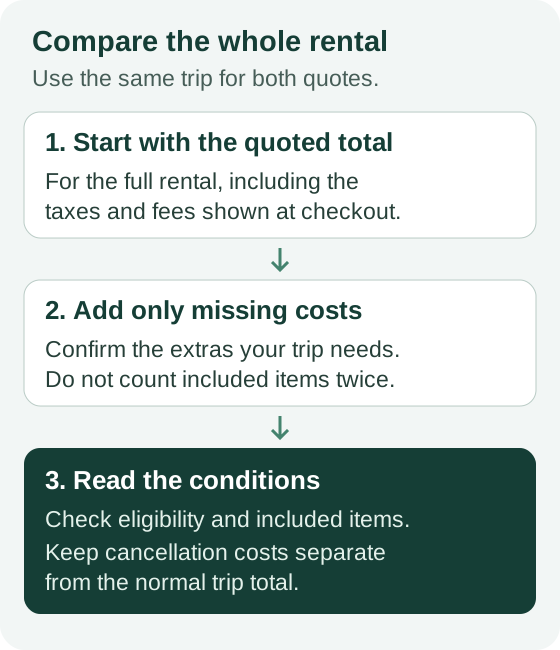
Check differences that can change the decision
For mileage, Avis's US reservation terms describe both unlimited and fixed allowances. Use the allowance on each quote and your expected driving distance to calculate any extra cost.
Check the fee for your actual second driver. Enterprise's US driver policy already allows a qualifying spouse or domestic partner at no additional charge, subject to its requirements. Compare the rules for the person who will actually drive.
Enterprise's US protection FAQ lists optional products that cost extra beyond its general reservation estimate. Your company agreement may differ. Read the named products and terms on each quote; our corporate rental protection guide explains the distinctions.
Compare cancellation separately. In the US, Avis's prepaid terms include cancellation charges, loss of the prepaid amount for an uncancelled no-show, and no refund for early return. A lower prepaid price may be less useful if your dates could change. For a travel-agent or online-agent booking, check that agent's cancellation process and policy.
If the cheaper quote leaves something unclear
Ask the rental company or booking agent to identify what is missing from the total and price those items for your trip. Keep that answer with the quote. For a work trip, Budget recommends asking your travel manager before selecting a rate below the company rate.
For a private trip, confirm that the company account permits it before comparing prices. If you rent through Enterprise, see how to check personal-use permission.